
global events
The Pan-African Biennale is not only an event, but a global movement. It connects people and institutions worldwide to engage with African urban futures—on the continent and beyond. Below is a selection of past and upcoming moments through which you can connect with the Biennale and its evolving vision.
past events
-
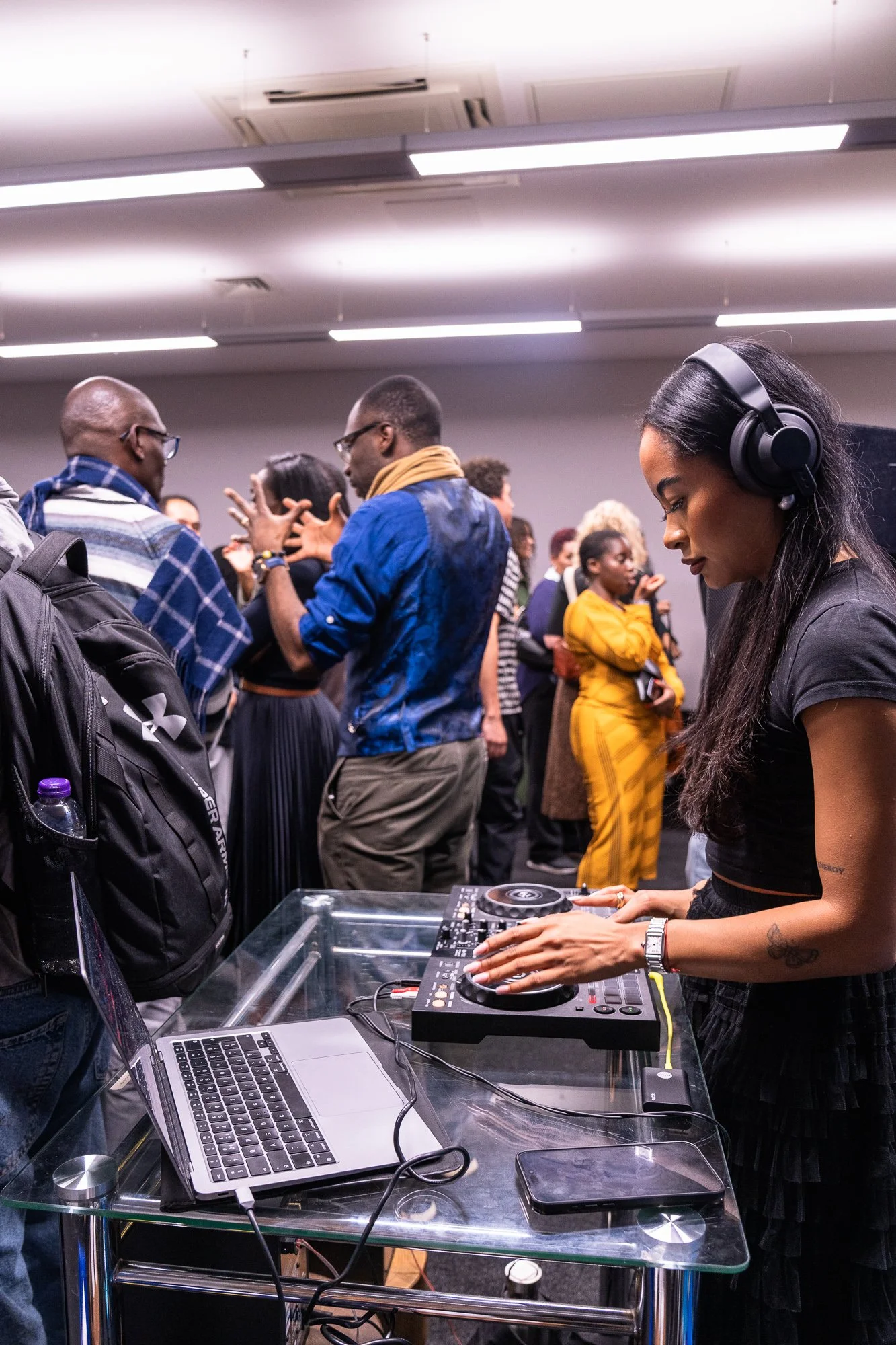
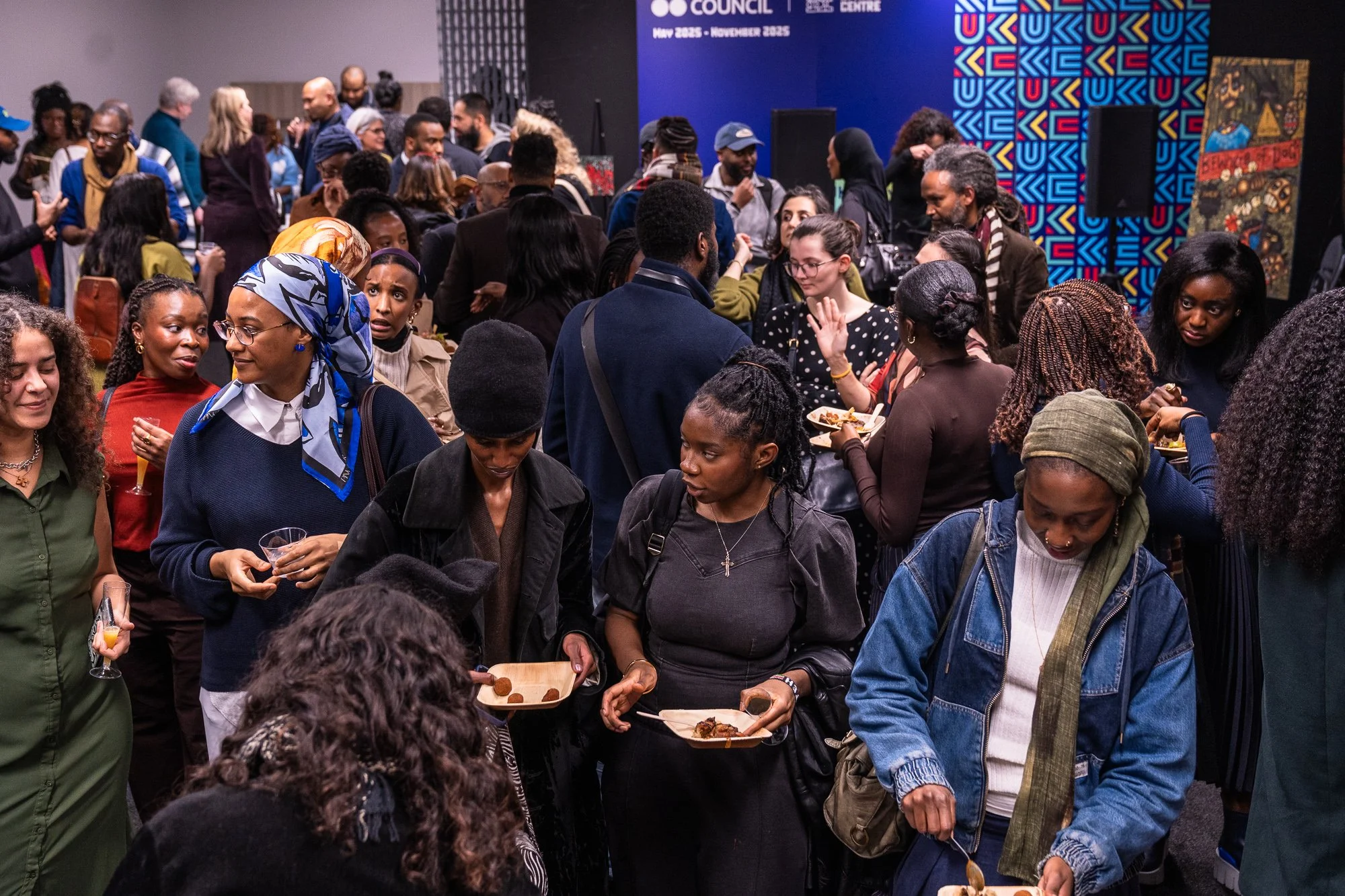
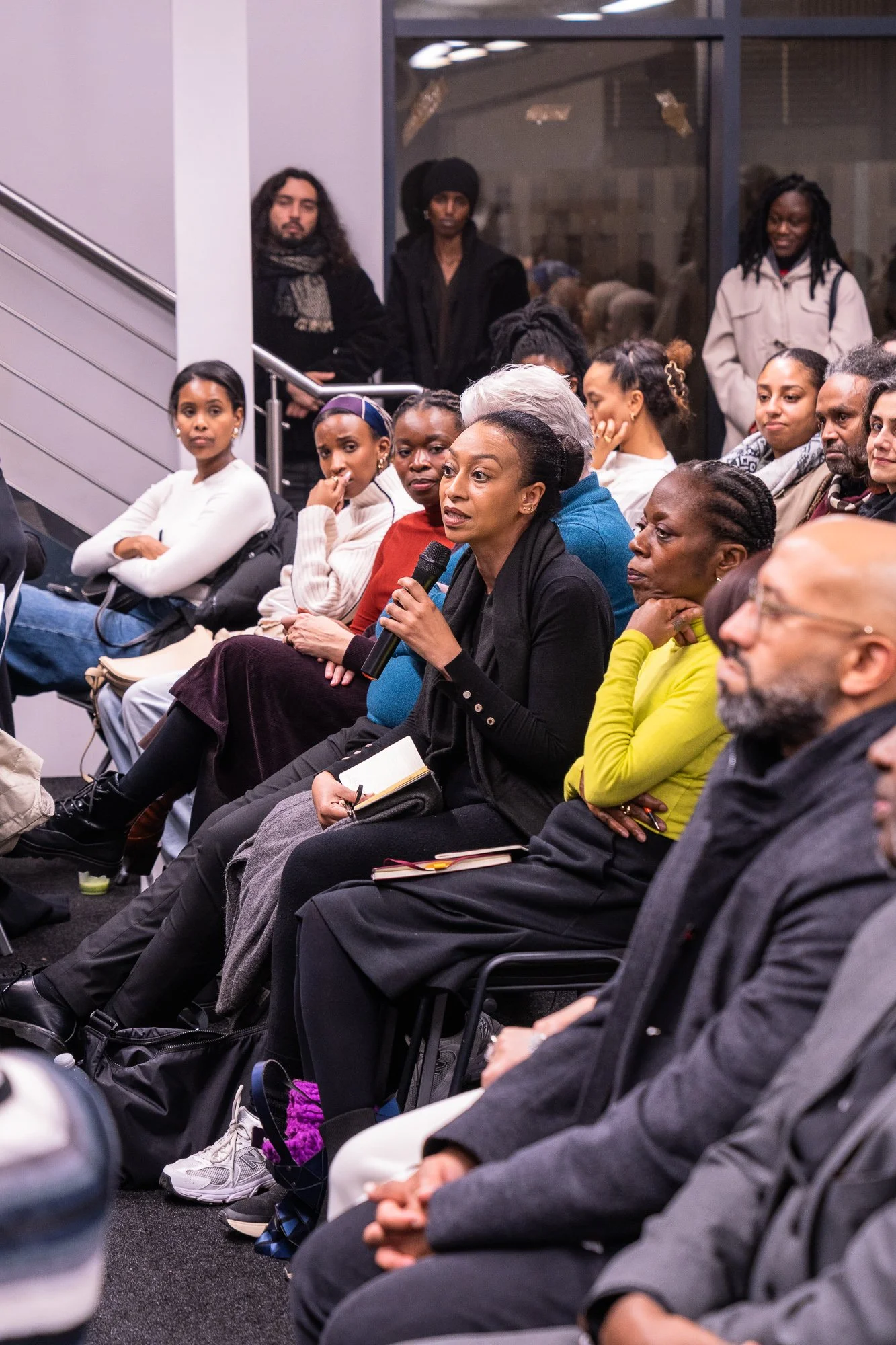
Public Lecture, Conversation & Reception 11 December 2025
Hosted by the Pan-African Biennale (PAB) in collaboration with Black Females in Architecture (BFA), supported by the British Council.In a moment defined by cultural, environmental, and geopolitical transformation, this gathering opens a critical exploration at the heart of the Pan-African Biennale’s curatorial direction. “Shifting the Center: From Fragility to Resilience” examines how Africa’s spatial, historical, and political realities—shaped by colonisation, extraction, displacement, and climate precarity—continue to structure global narratives of identity and architecture.
Rather than treating fragility as a condition to be corrected, the conversation reframes it as a site of knowledge, resistance, and creativity. The event asks how exhibitions, biennales, and cultural platforms can operate as tools capable of reframing inherited stories, unsettling dominant frameworks, and proposing new ways of seeing and making architecture. What forms of practice resist flattening and co-optation? How do we shift the center of discourse without reproducing old hierarchies? And what becomes possible when the continent’s architectural intelligence is positioned not at the margins but at the core of global conversation? The evening brings together architects, academics, and cultural practitioners for an open exchange on resilience, memory, vernacular intelligence, and the political work of representation. The lecture and panel will be followed by a reception at The Africa Centre, creating an informal space for continued dialogue and collective reflection.
-
ARCH+ Salon: Omar Degan
Issue Launch and Conversation with Pan-African Biennale Curator Omar Degan December 12 2025
Moderation: Markus Krieger, Melissa Makele, Anh-Linh Ngo (ARCH+)In September 2026, Nairobi will host the inaugural edition of the Pan-African Biennale, a continental platform conceived to rethink architecture from within Africa rather than through externally imposed frameworks. Under the title Shifting the Center: From Fragility to Resilience, the Biennale brings together voices from across the continent to question how architectural knowledge is produced, circulated, and legitimized.
On the occasion of the release of ARCH+ 262: African Spatial Thinking | Denkraum Afrika, architect and curator Omar Degan discusses the conditions that make a Pan-African platform both necessary and urgent today. The conversation reflects on architecture as a cultural and political practice shaped by history, memory, and continuity, and examines what it means to reposition Africa not as a peripheral case study, but as an active site of architectural thought and authorship.
The event opens a broader discussion on how global architectural discourse might change when its reference points shift—when agendas, concepts, and futures are articulated from the continent itself, and when Africa is understood as a formative force in shaping the built environment of tomorrow.
-
BK Talks: In Conversation with Omar Degan
08 December 2025
Organised by: Communicatie BKOn 8 December, BK Talks hosts In Conversation with Omar Degan, a session that examines how architectural education and research institutions in the West engage with contexts shaped by colonial legacies, political fragility, and uneven power relations.
The discussion moves beyond questions of access or inclusion to critically address modes of engagement: how collaborations are initiated, whose knowledge is prioritized, and how institutional frameworks can unintentionally reproduce extractive dynamics. Rather than asking whether Western institutions should be present or absent, the conversation focuses on how they might act differently—with greater accountability, reciprocity, and respect for local authorship.
Taking place during Omar Degan’s visit in the context of the upcoming Pan-African Architecture Biennale, the session invites collective reflection on what it means to support architectural futures that are autonomous, locally grounded, and self-defined. It asks how power can be redistributed, how partnerships can be restructured, and how architectural practice and research might contribute to long-term cultural and spatial agency rather than short-term interventions.
The conversation will be moderated by Irene Luque Martin, with contributions from Javier Arpa Fernandez, Jonathan Subendran, Laura Barnett, and Setareh Noorani.
-
Africa is the cradle of life and the birthplace of architecture home to ancient cities, complex spatial knowledge systems, and cultural lineages that long predate colonial narratives of “discovery.” Yet architectural history has often relegated the continent to the margins, framing it as peripheral rather than foundational. This lecture challenges that erasure. Drawing on the case of Somalia and the wider Horn of Africa, it examines how architecture emerges not only from moments of stability but from continuity, memory, and cultural resilience. Somalia becomes both a lens and a proposition: a territory shaped by rupture yet rich with spatial intelligence, identity, and historic depth. In Copenhagen, this conversation expands into the pre-launch of the Pan-African Biennale, inviting the Danish architecture community to engage with a continental project that seeks to reshape how African architecture is represented, debated, and imagined. The session opens a dialogue on how global architectural discourse can shift when Africa is positioned not as an afterthought, but as a source, an origin, and a leading voice in defining the future of the built environment.
-
PRE-LAUNCH OF THE PAN-AFRICAN ARCHITECTURE BIENNALE 2026
By Omar Degan
15 December 2025The Interuniversity Department of Regional and Urban Studies and Planning (DIST) and the Department of Architecture and Design (DAD) welcome Omar Degan to Turin for the concluding pre-launch event of the Pan-African Architecture Biennale 2026.
The event in Turin offers an exclusive introduction to the Biennale’s curatorial vision, presenting its thematic framework, objectives, and international collaborations. As the final stop in a global series of pre-launch conversations, the evening brings together voices from academia and professional practice to reflect on architecture’s role in shaping future imaginaries when Africa is understood not as a peripheral reference, but as a central and generative force.
The event invites dialogue, critical exchange, and anticipation around a project that seeks to redefine how African architecture is discussed, represented, and situated within contemporary global debates.
-
Pratt Institute 30 October 2025
This public lecture at Pratt Institute brought together a dynamic group of voices to explore how African architecture can reclaim its central place in global discourse. Led by Omar Degan, curator of the Pan-African Biennale, the conversation was hosted by Mark Gardner (Parsons | Jaklitsch/Gardner) and featured contributions from Gary Bates (Pratt UA | Make Make), Yetunde Olaiya (Pratt UA), and Ifeoma Ebo (Pratt Urban Placemaking and Management). The lecture challenged the long-held perception of Africa as peripheral to architectural history, reframing the continent as a source of cultural intelligence, spatial innovation, and urban resilience. Through the case of Somalia and the Horn of Africa, Degan highlighted how architecture emerges not only from stability but from continuity, memory, and adaptation in the face of fragility. Together, the speakers reflected on how African cities generate new forms of design, identity, and community-led transformation. The session left the audience with a central question:
What happens when we design through fragility and when Africa is placed at the center rather than the margins of architectural thought?